
BMI Calculator - Calculate Your Body Mass Index (BMI) with Our BMI Calculator
Welcome to Calorie Calculator, your trusted partner in health and wellness. Our free online BMI Calculator provides a simple way to calculate your Body Mass Index using your height and weight. This tool instantly reveals your weight category, helping you identify whether you're underweight, at a healthy weight, overweight, or obese. While BMI isn't a perfect measure of health, it offers a valuable starting point for understanding your weight relative to your height. Explore our BMI Calculator today to make informed decisions about nutrition, fitness, and overall well-being.
Brief Overview
Understanding your Body Mass Index (BMI) is essential for assessing your weight status and overall health. At Calorie Calculator, our free online BMI Calculator provides a straightforward method to measure your BMI using your height and weight. This tool helps categorize your weight as underweight, healthy, overweight, or obese, offering an insightful starting point for planning nutrition, fitness, and long-term health goals. By utilizing these results, you can make informed decisions to tailor your lifestyle choices, whether your objective is to lose weight, maintain it, gain muscle, or simply enhance fitness.
Key Highlights
- The BMI Calculator at Calorie Calculator helps determine your weight category and healthy weight range using height and weight.
- Understanding BMI is key for setting realistic fitness goals and making informed nutrition and lifestyle decisions.
- BMI Prime offers additional insights into weight status by comparing your BMI to the upper limit of the healthy range.
- Adult BMI categories provide insight into potential health risks and guide the formulation of health strategies.
- A BMI Chart is a valuable tool for tracking progress and aligning health goals over time.
Understanding Body Mass Index (BMI)
Understanding your Body Mass Index (BMI) is essential for assessing weight health. The Body Mass Index (BMI) is a crucial indicator, providing insight into your weight status. By measuring the body mass index, you can better understand how your weight compares to healthy guidelines. This mass index is determined using your height and weight. Our BMI Calculator helps you determine your body mass index, empowering you to make informed decisions and adopt a healthier lifestyle. Take control of your health with this simple mass index tool.
The Importance of BMI in Assessing Weight Status
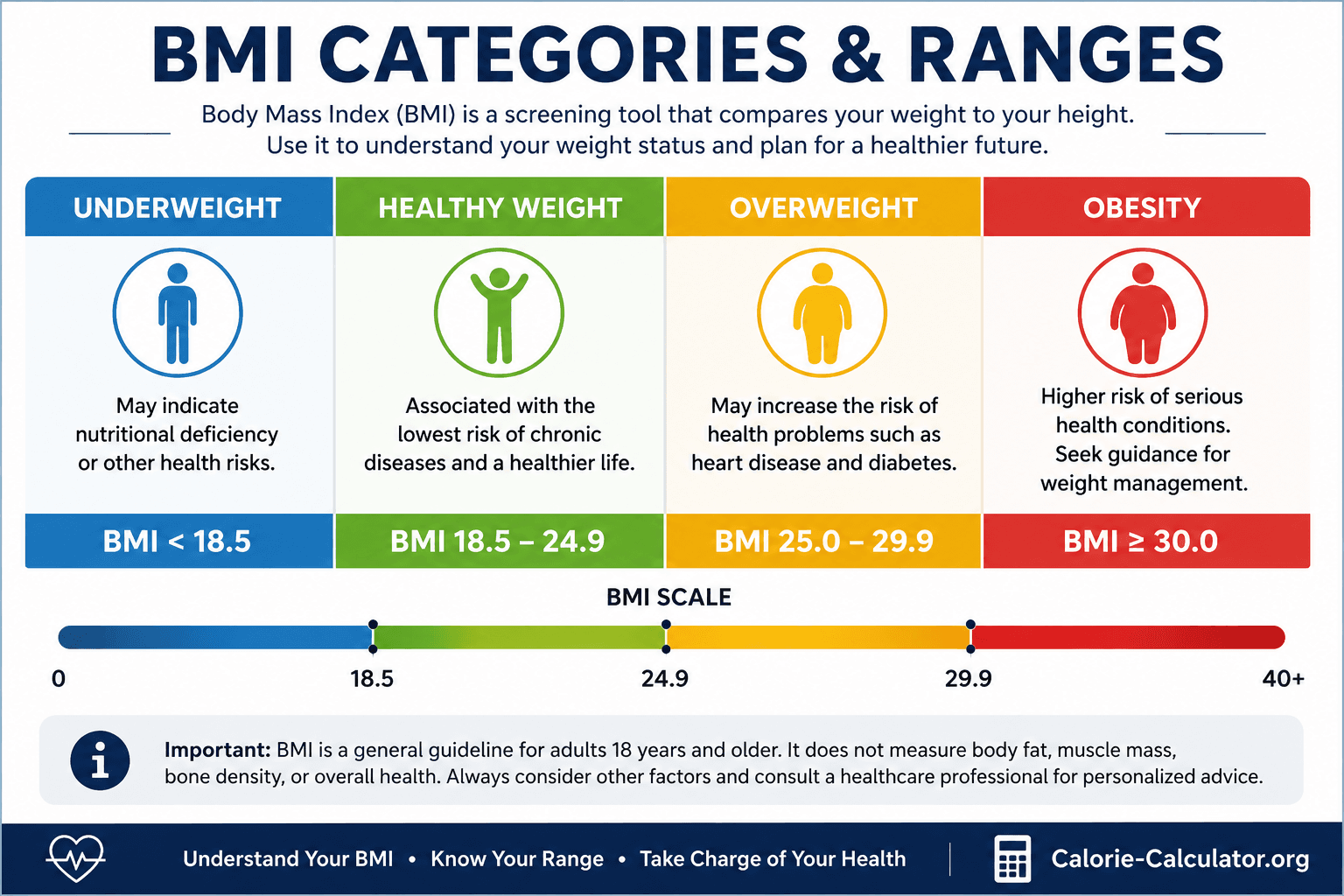
Body Mass Index (BMI) plays a crucial role for health professionals as they evaluate weight status. It helps determine if an individual falls under corresponding BMI categories like underweight, healthy, overweight, or obese. Older adults may have different considerations, but using BMI percentiles ensures comprehensive assessment. While BMI alone doesn’t specify body fat, it still provides valuable health insights. A healthy BMI promotes awareness and guides better lifestyle choices, illustrating why recognizing the importance of BMI in weight assessments is essential in guiding individuals to improve their overall health.
How Height and Weight Influence Your BMI
When understanding your BMI, it's essential to recognize how height and weight play crucial roles. BMI is calculated using your weight and height, offering insight into your health status. Simply enter your height and weight into the calculator for accurate results. While age isn't a direct component, it can still influence overall health. Don't forget that the relationship between weight, height, and BMI is vital for setting realistic goals. Monitoring changes in your height and weight assists in evaluating health progress over time.
Using the BMI Calculator for Accurate Results
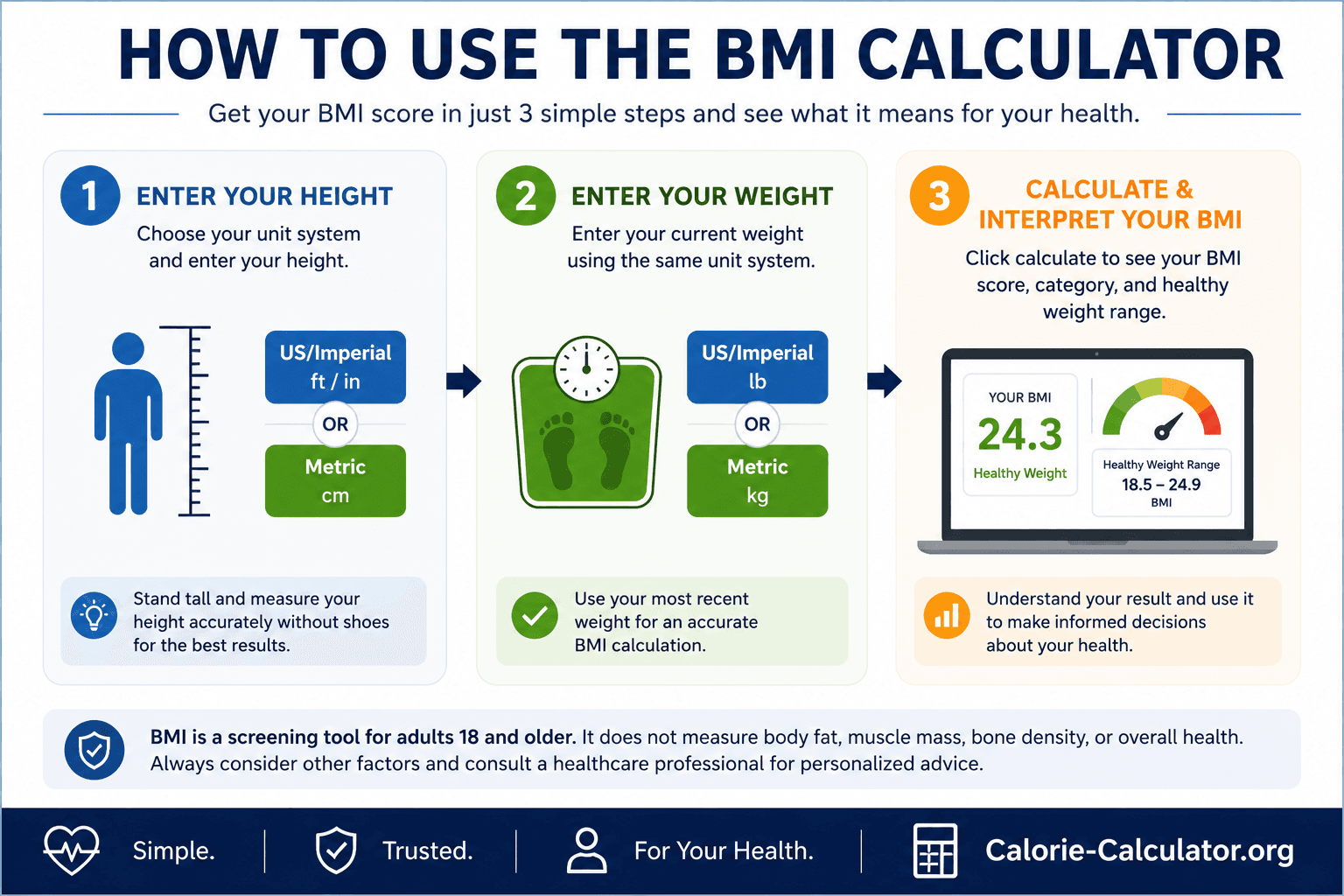
Your journey to understanding your BMI begins with using our BMI calculator. This intuitive calculator quickly provides your Body Mass Index by simply entering your height and weight. To use the calculator, input your measurements and then click the calculate button. The BMI calculator gives instant feedback on your weight category, helping you make informed decisions about your health. The BMI calculator also considers other factors for a comprehensive view, guiding effective nutrition and fitness plans tailored to your needs.
Steps to Determine Your Body Mass Index (BMI)
To accurately determine your Body Mass Index (BMI), follow these simple steps. First, enter your height using metric units. The BMI calculator uses both height and weight to provide accurate assessments. Be sure to input the correct units to ensure precision. Once you've entered your height, the calculator quickly computes your BMI based on the values provided. Understanding how your weight and height influence your BMI is key to making informed health decisions. With these steps, our calculator empowers you to track your weight and manage your fitness goals effectively.
Interpreting Results from a BMI Calculator
Understanding your BMI results is crucial for assessing your health. After using a BMI Calculator, you'll see your BMI range, which falls into one of several categories: underweight, healthy, overweight, or obesity. Your age doesn't affect your BMI category directly, but it's important to pair results with age-specific health advice. Keep in mind, BMI is just a starting point, and a deeper look into body composition and lifestyle factors is essential. Use these insights to create a personalized health plan.
Exploring BMI Prime as an Alternative Measurement
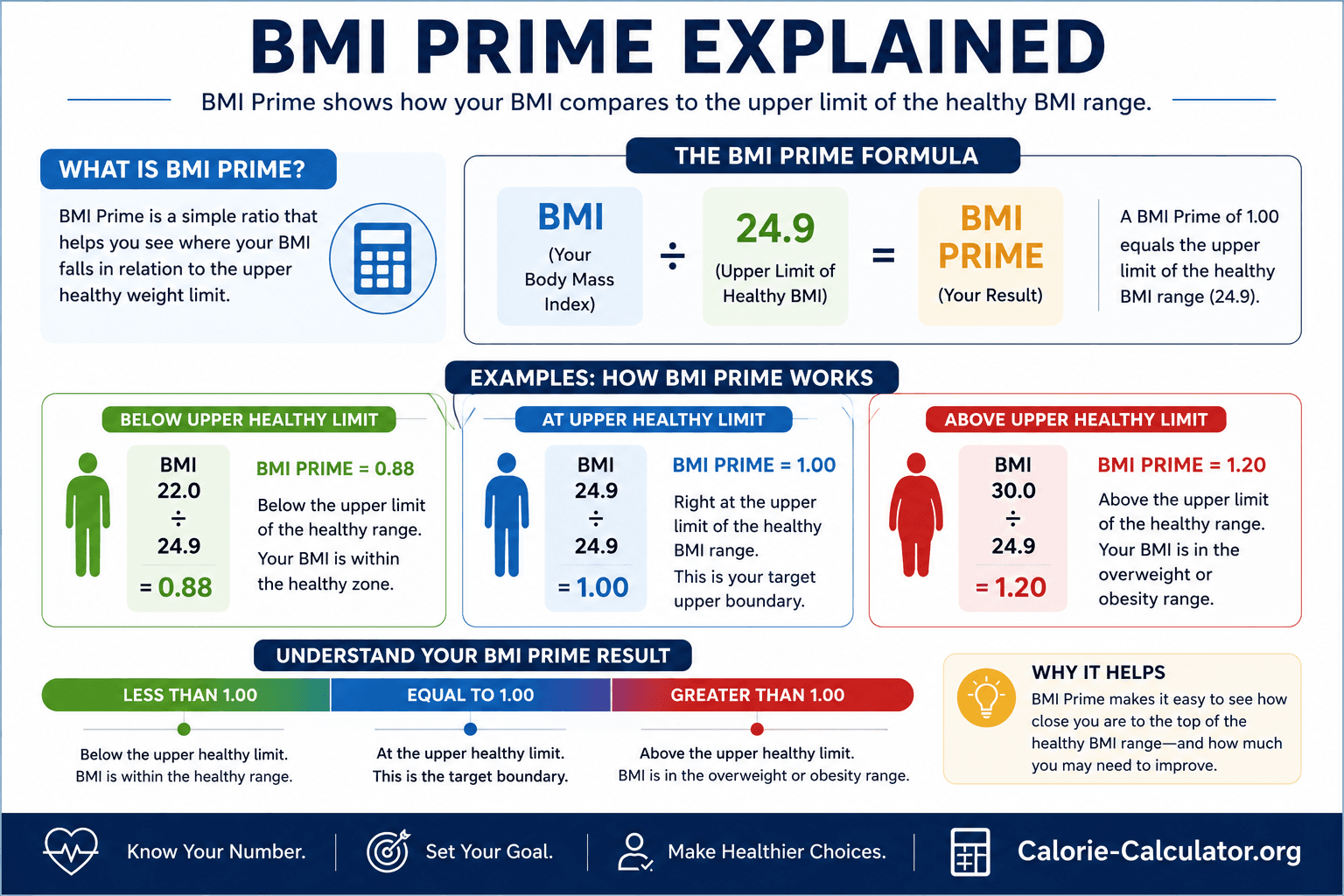
BMI Prime offers an innovative twist on traditional BMI by expressing the ratio of an individual’s BMI to the upper limit of a healthy BMI, providing greater insight into excess weight. Unlike conventional BMI, BMI Prime helps highlight risk factors and health goals with precision. While BMI remains useful, considering BMI Prime can refine how one approaches weight management. This alternative BMI measurement lends itself to those seeking a nuanced interpretation of health data, enhancing the effectiveness of informed nutrition and fitness planning.
What is BMI Prime and Its Relevance to Health Goals?
BMI Prime is an alternative to traditional BMI, offering a nuanced view of weight status. Calculated by dividing your actual BMI by the upper limit of the healthy BMI range, BMI Prime helps health professionals use a clear scale from 0 to 1. A key advantage is its utility in identifying obesity more precisely. It's valuable for setting personalized health goals. Knowing your BMI Prime, alongside BMI, aids in crafting a healthy weight strategy that aligns with your fitness and wellness objectives.
Adult BMI Categories and Their Health Implications
Understanding adult BMI is crucial for recognizing potential health risks associated with weight categories like overweight and obese. The BMI table helps identify these categories, providing insights into each class's health implications. For example, an overweight classification may signal increased risk for conditions like heart disease. In contrast, moving into the obese category often indicates more severe health concerns. By using the BMI table, adults can effectively gauge where they fall within these categories and adopt strategies to move towards a healthier weight range.
Understanding the BMI Table for Adults
The BMI table helps adults gauge their weight category and health risk, from underweight to obesity, using age-adjusted guidelines. This tool's invaluable for understanding healthy weight ranges as it accounts for changes that come with age. By referencing the bmi table, individuals can set personalized goals for maintaining a healthy lifestyle. It's crucial in identifying obesity levels and planning nutritional adjustments. Regularly reviewing the bmi table keeps your health journey on track and informs strategic health decisions aligned with age-associated health needs.
The Role of a BMI Chart in Health Management
The role of a BMI chart in health management can’t be understated. Adult BMI is a vital indicator for assessing weight categories like underweight or overweight. By using a BMI chart, you can gain insights into your health status and make informed decisions. Although BMI has its limitations, especially for child assessments, it remains a crucial tool for adults. Understanding your BMI helps tailor lifestyle choices that support healthier living. A BMI chart aids individuals to align their health and wellness goals effectively.
Utilizing a BMI Chart for Tracking Progress
Using a BMI chart is a handy way to track your progress over time, providing a visual representation of your place within the BMI categories. Whether you're younger or older, or even assessing BMI for children, these charts use weight and height measurements to show your index and category. Regularly checking the BMI table can motivate you to stay on course with health goals, making it easier to manage your weight and understand overall wellness trends effectively.
Practical Insights into Body Composition and Calorie Needs
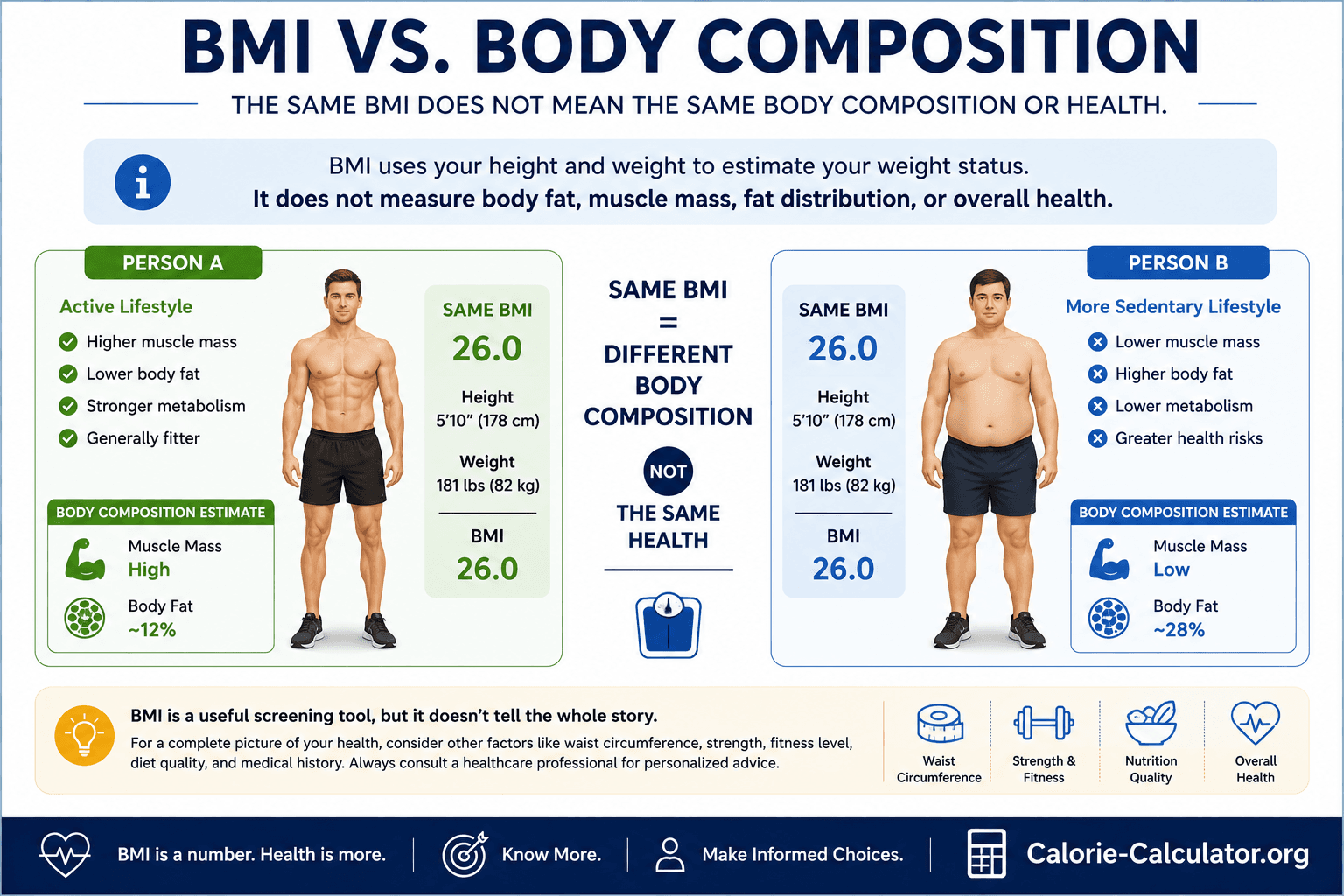
When calculating BMI, understanding your body composition and calorie needs for your weight, age, and health is essential. Body mass index, while not a direct measure of body fat, gives insight into where you stand in weight categories, from healthy to obesity. Age and overall health play a role in how you manage weight. Our BMI calculator helps you tailor each insight to your specific age and weight goals, offering practical guidance for achieving a healthy balance and managing obesity.
Using BMI Results to Inform Nutrition Plans
Using your BMI results, you can create a healthy nutrition plan tailored to your specific needs, considering your height, age, and weight categories. Whether you're overweight, obese, or within a healthy range, BMI offers insights into your body's requirements. As BMI doesn't account for specific age-related changes, it's vital to adapt your plan accordingly. Resources like gov guidelines can provide further age-related insights. By understanding how weight and body composition interact, you can effectively maintain or achieve a healthy lifestyle.
BMI categorizations and suggested actions
| BMI Range | Category | Description | Recommended Actions |
|---|---|---|---|
| Under 18.5 | Underweight | Below the healthy weight for height | Increase caloric intake and engage in strength training |
| 18.5 – 24.9 | Normal weight | Healthy weight range | Maintain current diet and engage in regular exercise |
| 25.0 – 29.9 | Overweight | Above healthy weight range, increased risk for certain health conditions | Adopt a balanced diet and increase physical activity |
| 30.0 and above | Obesity | High risk for health complications | Consult healthcare provider, create structured weight loss plan |
This table outlines BMI categorizations and suggested actions, reinforcing the significance of BMI in planning fitness and health goals.
Setting Achievable Goals Based on Your BMI
Understanding your BMI is crucial for setting weight goals, whether you're aiming for a healthy weight, losing weight, or gaining weight. The CDC defines BMI categories that help individuals, including adults, teens, and children, determine if they're underweight, healthy weight, overweight, or obese. These bmi categories offer guidance to set realistic health objectives. By using our BMI calculator, you can align your nutrition and fitness plans to match your BMI results, ensuring you embark on a journey that supports long-term health and wellness.
For those in the underweight BMI category, focusing on healthily gaining weight:
- Consult a healthcare professional to rule out any underlying health issues and receive personalized dietary advice.
- Set a target of gaining a modest amount of weight each week, such as 0.5 to 1 pound, and monitor changes.
- Increase caloric intake with nutrient-dense foods like nuts, seeds, and whole grains, ensuring a balanced diet.
- Incorporate strength training exercises to build muscle mass and improve overall body composition.
- Regularly measure your BMI and adapt your eating and exercise plans as your weight changes.
- Ensure adequate fluid intake and avoid skipping meals to promote weight gain.
- Keep a positive outlook on your journey and acknowledge your progress to stay motivated.
For those in the healthy weight BMI category, focusing on maintaining their weight:
- Consult with a healthcare professional to confirm your current habits are ideal for maintaining weight.
- Set goals related to fitness levels, such as improving endurance or strength, and track improvements.
- Focus on a balanced diet rich in fruits, vegetables, lean proteins, and whole grains to sustain energy levels.
- Engage in regular physical activity, combining cardiovascular workouts and strength training.
- Check your BMI periodically to ensure it remains stable and fine-tune your lifestyle habits as needed.
- Stay hydrated and practice mindful eating, savoring meals without distractions.
- Celebrate maintaining a healthy weight and acknowledge your commitment to a healthy lifestyle.
For those in the overweight BMI category, focusing on healthily losing weight:
- Work with a healthcare provider to create a safe and effective weight loss plan.
- Set a target to lose about 1-2 pounds per week, and keep a journal of your daily progress.
- Adopt a nutritious diet that emphasizes portion control and includes a balance of macronutrients.
- Incorporate activities like walking, cycling, or swimming at a moderate intensity for at least 150 minutes per week.
- Monitor changes in your BMI and adjust dietary and exercise plans accordingly.
- Keep hydrated and eat mindfully, recognizing hunger cues and avoiding emotional eating.
- Focus on non-scale victories like improved energy levels and reward yourself for staying consistent.
For those in the obese BMI category, aiming for significant lifestyle change:
- Seek the guidance of a healthcare professional or registered dietitian to create an individualized plan.
- Set small, achievable milestones for weight loss, such as a 5-10% reduction in body weight over six months.
- Prioritize a balanced diet that reduces calorie intake while ensuring nutritional adequacy.
- Begin with low-impact exercises suitable for your fitness level and evolve as your endurance improves.
- Regularly check changes in your BMI, using it as a tool to adjust your approach to weight management.
- Maintain proper hydration and adopt mindful eating strategies to enhance meal satisfaction.
- Encourage a positive mindset by celebrating incremental successes and focusing on long-term health benefits.
Understanding your BMI can play a crucial role in your overall health journey. Our BMI Calculator at Calorie Calculator offers a simple way to gauge your body composition and plan your next steps. Armed with this knowledge, you can tailor your diet and exercise routines to better meet your goals, whether they are weight loss, maintenance, or muscle gain. Remember, every health journey is unique, and these insights can empower you to make informed decisions for a healthier lifestyle. For personalized plans and further guidance, explore more of our resources.
Frequently Asked Questions
What is BMI and how is it calculated?
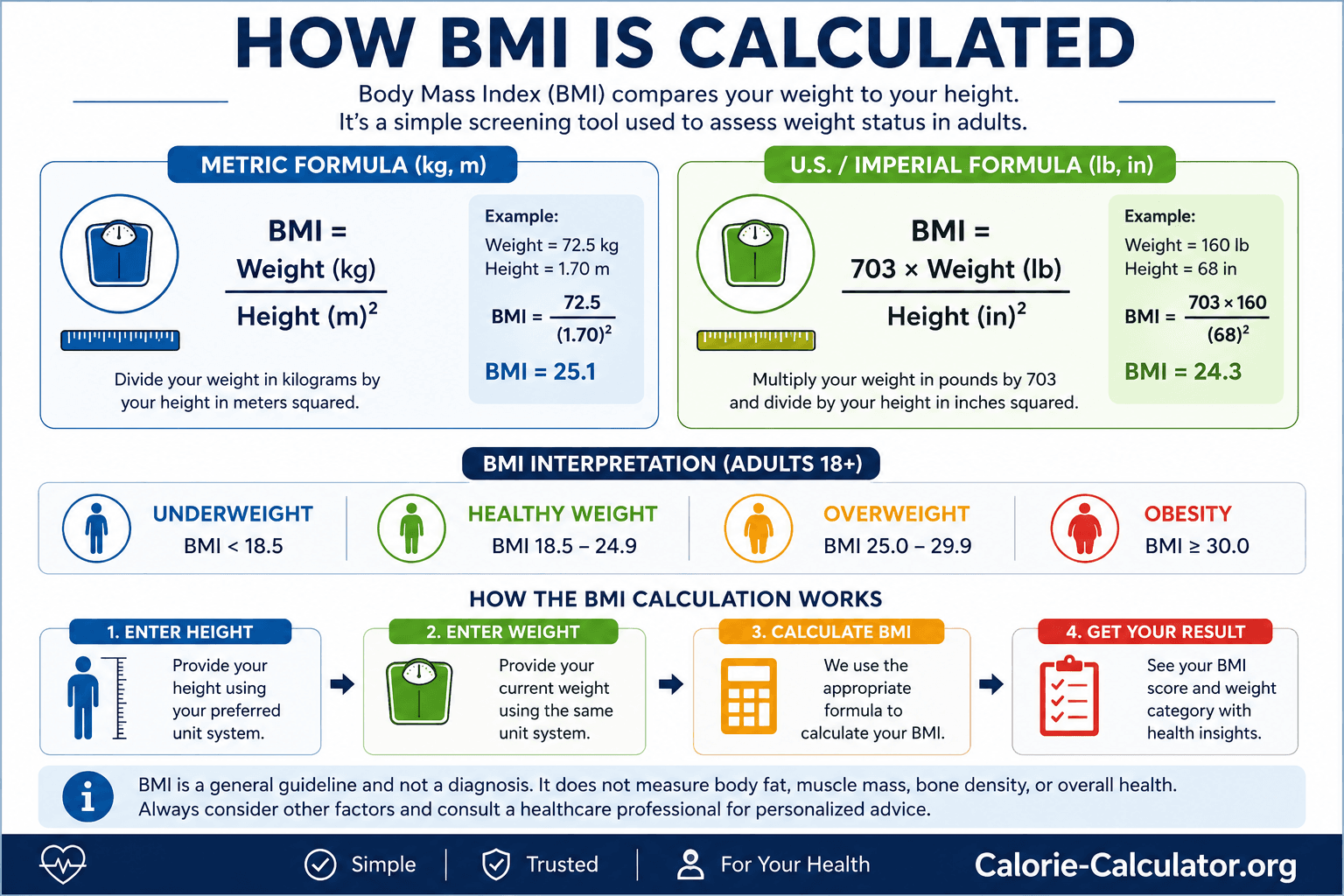
Body Mass Index (BMI) is a value derived from the weight and height of a person. It's calculated by dividing a person's weight in kilograms by the square of their height in meters.
BMI = weight (kg) / [height (m)]^2How can I use the BMI Calculator on Calorie Calculator?
To use our BMI Calculator, simply input your height and weight into the respective fields on the site, and click the calculate button. The tool will instantly provide your BMI and indicate your weight category, such as underweight, healthy weight, overweight, or obese.
Is BMI an accurate measurement of one's health?
While BMI is a useful tool for gauging weight categories, it is not a comprehensive reflection of body fat or overall health. It should be used as a starting point in conjunction with other measurements like body composition and lifestyle factors to evaluate health.
What is BMI Prime and how does it differ from traditional BMI?
BMI Prime is calculated by dividing your BMI by the upper limit of the healthy BMI range. It provides a better understanding of weight status by offering a scale from 0 to 1, thus giving a more refined insight, especially for assessing health risks associated with excess weight.
Why is understanding BMI important for setting health goals?
Understanding BMI is crucial for setting realistic fitness and weight management goals. It helps you identify if you fall within a healthy weight range or need adjustments. This awareness can guide you in making informed decisions about diet, exercise, and overall lifestyle to enhance health and well-being.